
 By Bede Halsey
Why Travellers Experience Body Fatigue and Tightness
Long-haul travel can take a toll on the body. Hours of sitting in confined spaces restrict blood circulation, shorten hip flexors, and strain the lower back. Over time, this leads to soreness, poor posture, and fatigue. Frequent travellers often complain of tight hips, stiff shoulders, and swollen feet after flights. Using the yoga wheel can be a practical way to prevent and relieve these issues.
Unlike traditional yoga props that are limited to a studio environment, the yoga wheel offers a versatile, portable solution. Its circular design makes it easy to roll out stiff muscles, release tension, and realign posture after long hours of sitting. For business travellers or digital nomads, this single prop can serve as a compact wellness tool that fits easily into travel routines.
How Travel Affects Your Muscles and Joints
During long flights or car rides, the body remains static for extended periods. The following changes typically occur:
-
Reduced circulation: Blood flow to the legs slows down, leading to muscle stiffness and swelling.
-
Compressed spine: Sitting for long durations flattens the natural spinal curves and causes pressure on the lower back.
-
Shortened hip flexors: Constant sitting keeps the hips in a contracted position, reducing mobility and flexibility.
-
Shoulder and neck strain: Looking down at screens or resting against awkward seats promotes muscular imbalance.
Even after arriving at a destination, the combination of fatigue, jet lag, and time zone adjustments can make recovery slower. The yoga wheel helps counteract these effects through gentle, controlled stretching and mobility training that can be done almost anywhere.
Benefits of Using a Yoga Wheel While Travelling
Integrating yoga wheel practice into travel habits provides both immediate and long-term benefits.
1. Improved Circulation
Gentle rolling and stretching increase blood flow to stiff muscles, helping prevent numbness and swelling in the legs.
2. Posture Realignment
After hours of sitting, rolling the upper back on a yoga wheel helps decompress the spine and restore natural curvature.
3. Enhanced Mobility and Flexibility
Even five minutes of practice can open the hips, shoulders, and chest, countering the hunched position from flights.
4. Stress Reduction and Relaxation
Mobility routines promote deeper breathing and calm the nervous system, reducing travel-induced anxiety and restlessness.
5. Compact and Portable Design
Most yoga wheels are lightweight and can fit in a carry-on or checked luggage, making them ideal for frequent travellers.
Quick Wheel-Yoga Routine for Travellers
Travellers can perform short, restorative sessions at airports, hotels, or after reaching their destination.
Pre-Flight Routine
Perform these movements 30 minutes before departure to prepare the body:
-
Chest Opener Stretch: Sit with the wheel behind your spine, gently lean back to open the chest and shoulders.
-
Seated Twist: Place the wheel at your side, use it to support gentle spinal rotations.
-
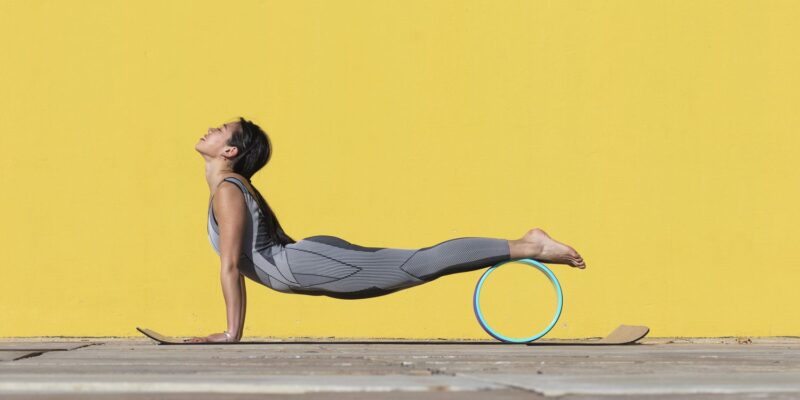
Hamstring Roll: Extend one leg over the wheel and roll it forward and back to stretch the hamstrings.
In-Flight Tips
Though space is limited, focus on micro-movements and breathing:
-
Flex and point your toes every 30 minutes to improve circulation.
-
Stretch your arms and twist gently while seated.
-
Breathe deeply to maintain oxygen flow and reduce stiffness.
Post-Flight Routine
Once you reach your hotel, a short 15-minute yoga wheel flow can make a huge difference.
-
Spinal Roll-Out: Lie down and roll from the lower to upper spine, pausing on tense areas.
-
Hip Release: Sit with one ankle over the opposite knee, place the wheel under the supporting thigh, and gently press.
-
Leg Elevation: Place calves on the wheel while lying down to improve blood flow and reduce swelling.
Making Wheel Yoga Travel-Friendly
If packing a full-sized yoga wheel feels impractical, consider compact versions or inflatable options that provide similar benefits. These travel-sized wheels can be deflated and re-inflated, taking minimal space while retaining functionality.
Packing and Care Tips:
-
Choose a lightweight, hollow wheel for easy carrying.
-
Use a drawstring bag to protect it from dirt.
-
Wipe it down with sanitising wipes after use in public spaces.
-
Store it under a seat or in a suitcase corner to save space.
Real-Life Scenarios: Travellers Who Benefit from Wheel Yoga
-
Business Travellers: Using a yoga wheel between meetings reduces back fatigue and helps maintain focus.
-
Athletes: It provides pre-competition muscle preparation and post-event recovery during travel.
-
Frequent Flyers: A simple routine before and after flights prevents chronic stiffness and swelling.
-
Digital Nomads: Practising wheel yoga in limited apartment spaces maintains mobility and flexibility.
A balanced mobility routine also enhances sleep quality and overall energy, ensuring travellers arrive refreshed and ready to perform.
The Science Behind Motion and Recovery
When the body remains immobile, fascia — the connective tissue around muscles — becomes sticky and less elastic. The circular motion of the yoga wheel assists in breaking these adhesions, improving fluidity between muscle layers. Rolling pressure enhances tissue hydration, similar to massage therapy. This leads to better recovery, posture correction, and energy restoration, especially after long travel hours.
Breath control complements this process. Slow inhalation and exhalation stimulate the parasympathetic nervous system, reducing stress and tension. Together, these practices make the yoga wheel an effective mobility and relaxation tool for travellers.
Integrating Yoga Wheel Practice into Travel Routines
Consistency is key to maintaining flexibility while on the move.
-
Before Departure: Perform a 10-minute session to prepare the body.
-
During Travel: Take micro-breaks every 90 minutes for movement.
-
After Arrival: Dedicate 15–20 minutes to a gentle recovery routine.
Small adjustments like these can prevent travel-induced aches, stiffness, and fatigue.
For regular guidance and professional instruction, you can explore structured classes at Yoga Edition, where wheel-based mobility sessions help integrate posture awareness, core stability, and restorative flow into everyday movement.
FAQ
Q1. Can I take a yoga wheel on a plane?
Yes, most airlines allow a standard yoga wheel in checked or carry-on baggage. Ensure it fits your bag dimensions and is made of lightweight material.
Q2. How often should I use a yoga wheel during travel?
Practising before and after long flights is ideal. Frequent travellers may benefit from short daily sessions to maintain mobility.
Q3. Can wheel yoga help with jet lag?
While it does not directly influence sleep cycles, gentle rolling and stretching promote relaxation and improved circulation, helping your body adjust faster.
Q4. What if I don’t have space for a wheel?
You can use smaller props like an inflatable wheel, resistance band, or towel to mimic rolling movements.
Q5. Is yoga wheel practice suitable for seniors who travel often?
Yes, provided movements are slow and controlled. The wheel supports gentle stretching, making it suitable for various ages and flexibility levels.
By incorporating mobility exercises and mindful breathing into your travel schedule, the yoga wheel becomes more than a prop — it transforms into a personal wellness companion that keeps you flexible, balanced, and energised throughout your journey.